Job 14 of 16
Digging on your lot: call 811 first
Washington's dig law, RCW 19.122, has homeowners give notice through 811 two to 10 full business days before digging, and underground lines you own on your property are yours to locate.
Revised November 4, 2026
How it changes, sheet by sheet
Tacoma's side sewer tips: check house plans, ask the previous owner, search permit records or the DART map, or call 811 or (800) 424-5555. The city has more detailed records for homes built after 1950.
Ruston adds a surface rule: sewer work within 15 feet of the right-of-way may also need a street excavation permit, at (253) 759-3544 ext 4.
Backyard sewer mains exist here, and a 2019 project rerouted a line that ran beneath a house. Call Public Works at (253) 564-8900 before planning a trench. The city's site also links a Dirt Alert smelter plume map.
Septic tanks, drainfields and wells are usually yours to find. Pierce County's records page says the health department holds septic as-builts and well records.
Kitsap Public Health, 360-728-2235, is the local agency to ask for help locating a septic system; DOH says local health agencies can help.
Pierce County's public GIS map shows sewer mainline as-builts: search your parcel, then "Utilities" and "Sewer". Building sewer work needs a county-registered sewer contractor.
What must you do before digging?
Give notice, after marking the spot. RCW 19.122.030 sets the order:
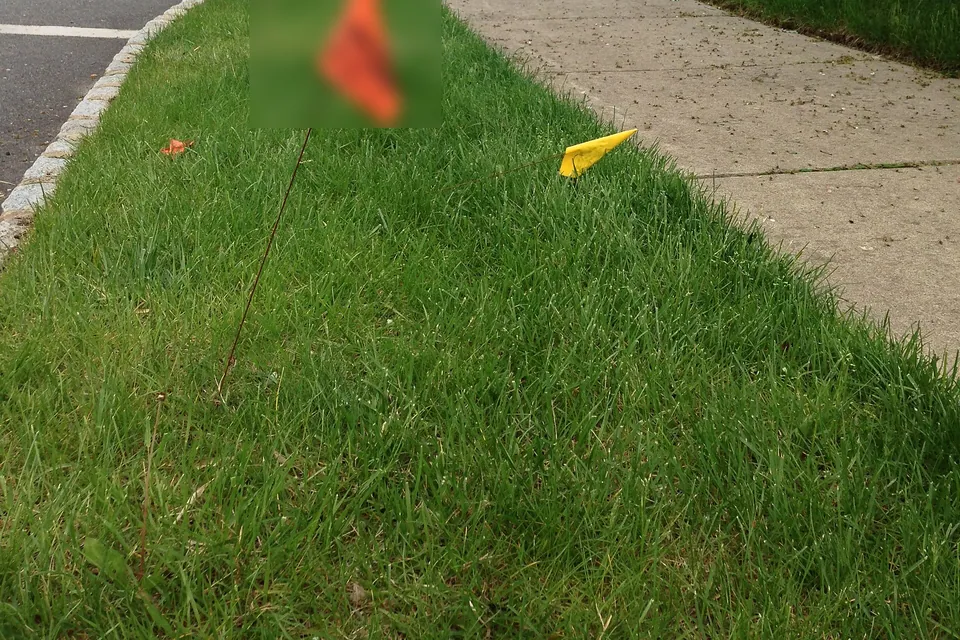
- Mark the boundary of the planned excavation with white lining or, when necessary, white pin flags.
- Give notice "not less than two full business days and not more than 10 full business days before the scheduled work-to-begin date".
- Wait. On and after January 1, 2026, no excavation may start until all operators in the noticed area have given a positive response.
The UTC says you can request a locate at callbeforeyoudig.org or by calling 811. Questions go to (360) 664-1118. Tacoma's page also lists (800) 424-5555.
Does it apply to a homeowner?
Yes. The UTC's 2025 release says the amended law took effect July 27, 2025 and applies to homeowners, and that the call and the locates are free. You must maintain the marks for up to 45 days. After that you need a new locate.
There is one narrow exception. RCW 19.122.031 exempts excavation of less than twelve inches on private noncommercial property by the person, or an employee of the person, who owns or occupies it. Our advice is to call anyway, because depth is hard to judge from the surface.
How close are the flags?
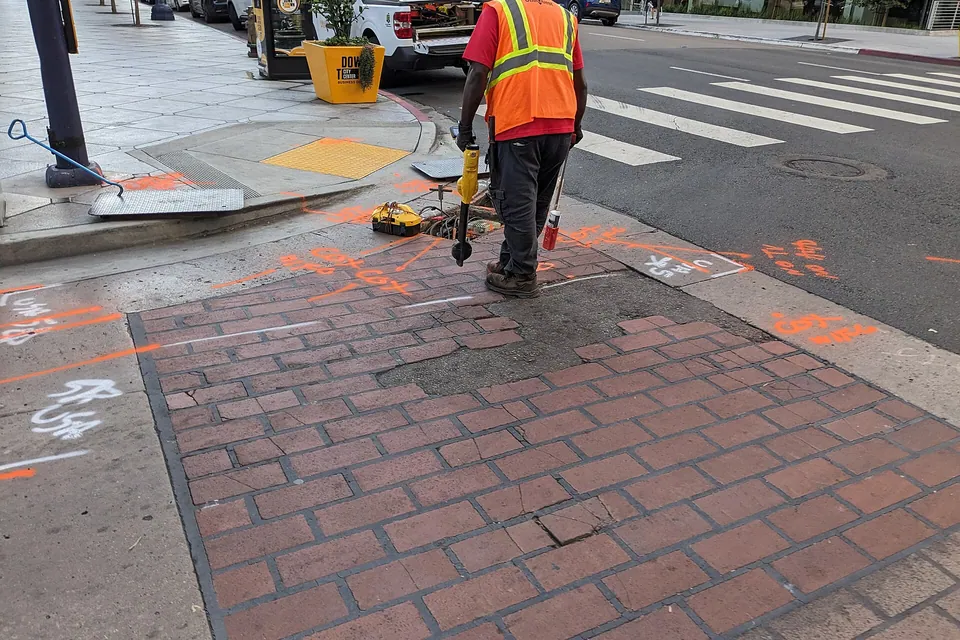
Within 24 inches. The statute defines "reasonable accuracy" as location within twenty-four inches of the outside dimensions of both sides of an underground facility. So a flag marks a band, not a precise spot, and a machine near that band needs care. For a job that close to a line, hire it out to a licensed or registered contractor.
What will 811 not mark?
Your own lines. The statute says: "An end user is responsible for locating on their own property the underground facilities that they own". The locator service keeps a list of private-line locate providers, hired at your cost.
Service laterals are split. Under RCW 19.122.030(3)(c), operators designate them if they connect end users to the main and lie within a public right-of-way or utility easement and the excavation area. That leaves plenty that nobody flags for you:
- A side sewer on your own land.
- A septic tank and drainfield, or a private well line.
- Sprinkler lines, irrigation wire and lines out to a shed.
Don't assume a clear 811 ticket means a clear trench.
What does skipping it cost?
The figures depend on what you hit. The UTC's 2025 release says damaging gas or hazardous liquid pipelines carries civil penalties up to $25,000, and a pipeline violation with no damage up to $5,000. Separately, the UTC's realtor page lists $1,000 for digging without calling, and $10,000 plus triple repair costs for digging without calling and damaging a utility. That page may predate the 2025 changes, so treat those two figures as that page's own.
Who should dig?
Often a contractor, and each city words this itself. For repairs in its right-of-way, Tacoma wants a contractor with a local license and bond. On a bluff or slope, ask first, and read who to ask about shoreline lots. A trench can also pull in a permit, listed under plumbing permits, office by office.
If digging exposes or damages a gas line, or you smell gas, leave first. Use no switches or phones until you are outside and well away, then call 911 and the gas utility. Stay out of any trench that looks unstable, and if a sewer line breaks, keep people and pets clear of the sewage.
Check your own address
- Paint or flag the dig area in white before you make the request.
- Write down the day you requested, the day you plan to start and the day the marks reach 45 days.
- Ask your city or county for any record of your side sewer, and ask the health department for septic and well records.
- Hire a private-line locator from the list the locator service keeps if your own lines cross the dig area.
Source notes
- RCW 19.122.030. Checked November 4, 2026.
- RCW chapter 19.122. Checked November 4, 2026.
- Changes to Washington dig law take effect July 27, Utilities and Transportation Commission. Checked November 4, 2026.
- Washington dig law for realtors, Utilities and Transportation Commission. Checked November 4, 2026.
- Wastewater resources, City of Tacoma. Checked November 4, 2026.
- Sanitary and storm sewer, Town of Ruston. Checked November 4, 2026.
- Public Works, City of Fircrest. Checked November 4, 2026.
- Public Works department contacts, City of Fircrest. Checked November 4, 2026.
- City of Fircrest home page. Checked November 4, 2026.
- Septic systems, Washington Department of Health. Checked November 4, 2026.
- Public records, Pierce County. Seen only as a search summary on November 4, 2026; confirm on the page.
- Residential Sewer Customer Guide, Pierce County. Seen only as a search summary on November 4, 2026; confirm on the page.
- Septic programs, Kitsap Public Health District. Seen only as a search summary on November 4, 2026; confirm on the page.